1. Trip/Itinerary Pages Built for Comparison
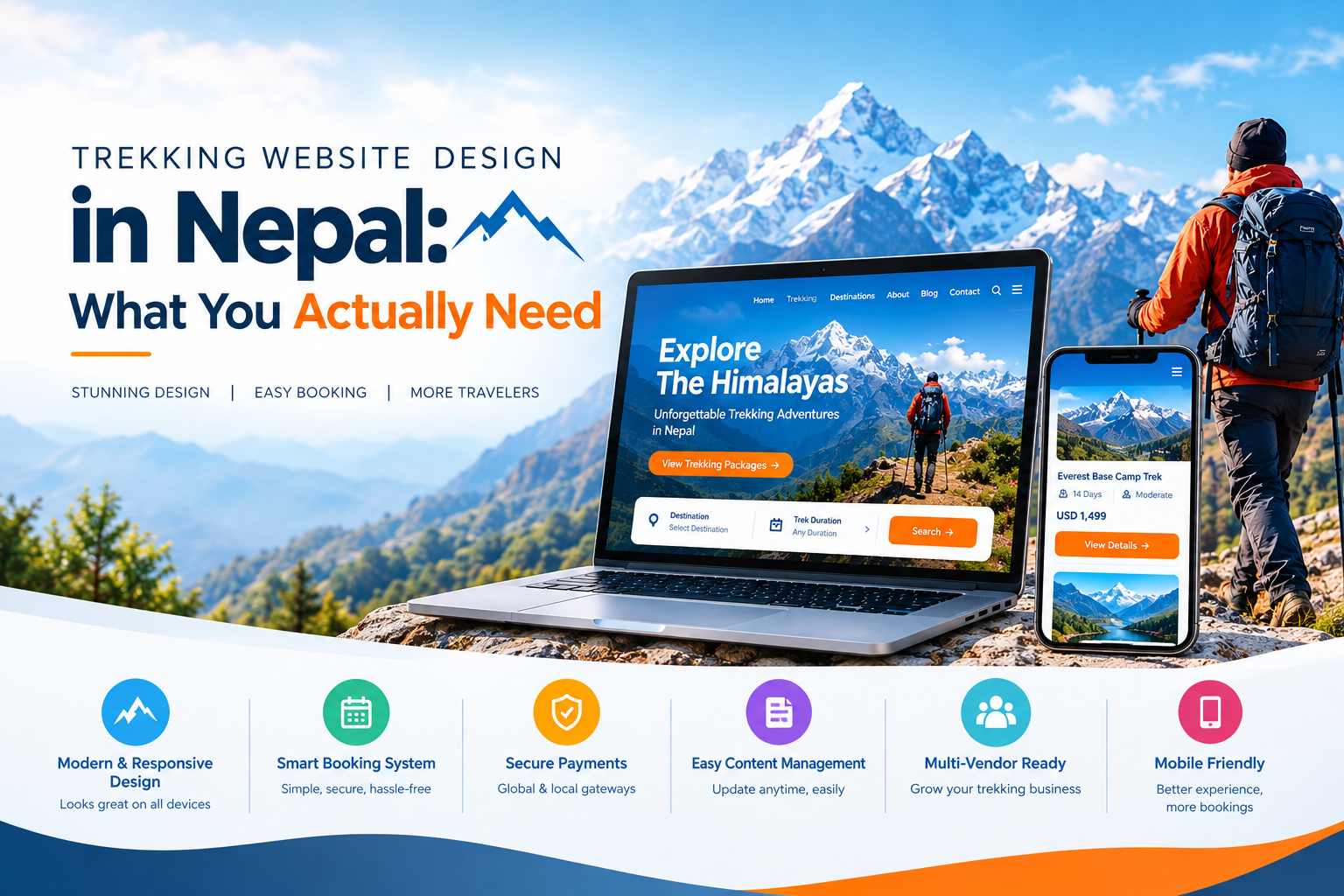
Every trek or tour needs its own dedicated page with:
- Day-by-day itinerary breakdown
- Difficulty level, max altitude, and best seasons
- Inclusions/exclusions (permits, guide, porter, meals, accommodation)
- Fixed departure dates and pricing by group size
- Downloadable PDF itinerary for offline reference
2. Online Booking & Inquiry System
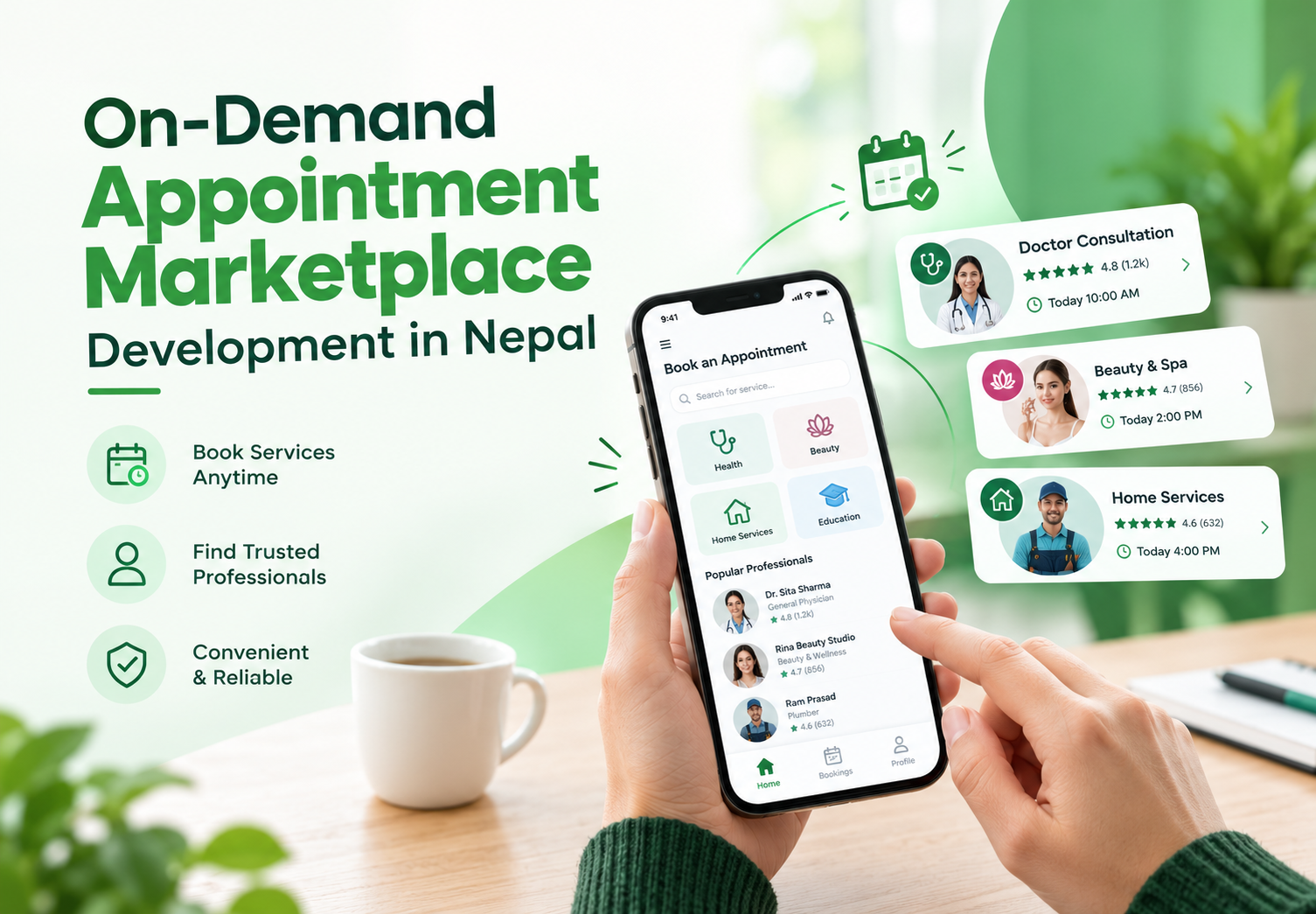
Most international trekkers won't call — they expect to inquire or reserve online. This can range from a simple booking form with deposit payment to a full system showing real-time seat availability on fixed departures. If you want to understand how this kind of system is typically scoped and priced, our guide on booking and appointment app development in Nepal breaks down the same logic used for trekking reservations.
3. Multi-Currency & International Payment Support
Since your customers are paying from abroad, you need Stripe, PayPal, or similar gateways alongside local options like eSewa or Khalti for domestic transactions and partner payments. See our payment gateway integration guide for Nepal for a full breakdown of supported gateways and setup steps.
4. High-Performance Image & Video Handling
Trekking sells on visuals — mountain views, trail photos, cultural experiences. But large, unoptimized images are the single biggest reason travel websites load slowly. Proper compression, lazy loading, and a CDN are essential, not optional.
5. Reviews and Trust Signals
TripAdvisor integration, Google reviews, verified traveler testimonials, and visible certifications (Nepal Tourism Board registration, TAAN membership) do more to convert bookings than any design element.
6. Blog & SEO Content
Trekkers research obsessively — "Everest Base Camp difficulty," "best time for Annapurna Circuit," "Langtang trek permit cost." A well-optimized blog is often where the sale actually starts, long before someone visits your booking page. If you're new to this, start with our What is SEO? guide for Nepali businesses to understand the fundamentals before applying them to travel content.
7. Mobile-First Design
A large share of your traffic will come from travelers browsing on phones while planning. If your itinerary pages, forms, and galleries aren't smooth on mobile, you're losing them before they even reach pricing.
8. Multi-Language Support (Optional but Powerful)
If you're targeting European or East Asian markets specifically, offering key pages in German, French, Spanish, or Chinese can meaningfully increase conversions.