Web Creation Nepal Private Limited
Get a Quote

Contact Support

977-01-5343968 / 9851029233[email protected]
Sunday – Friday: 09:00 AM – 06:00 PM

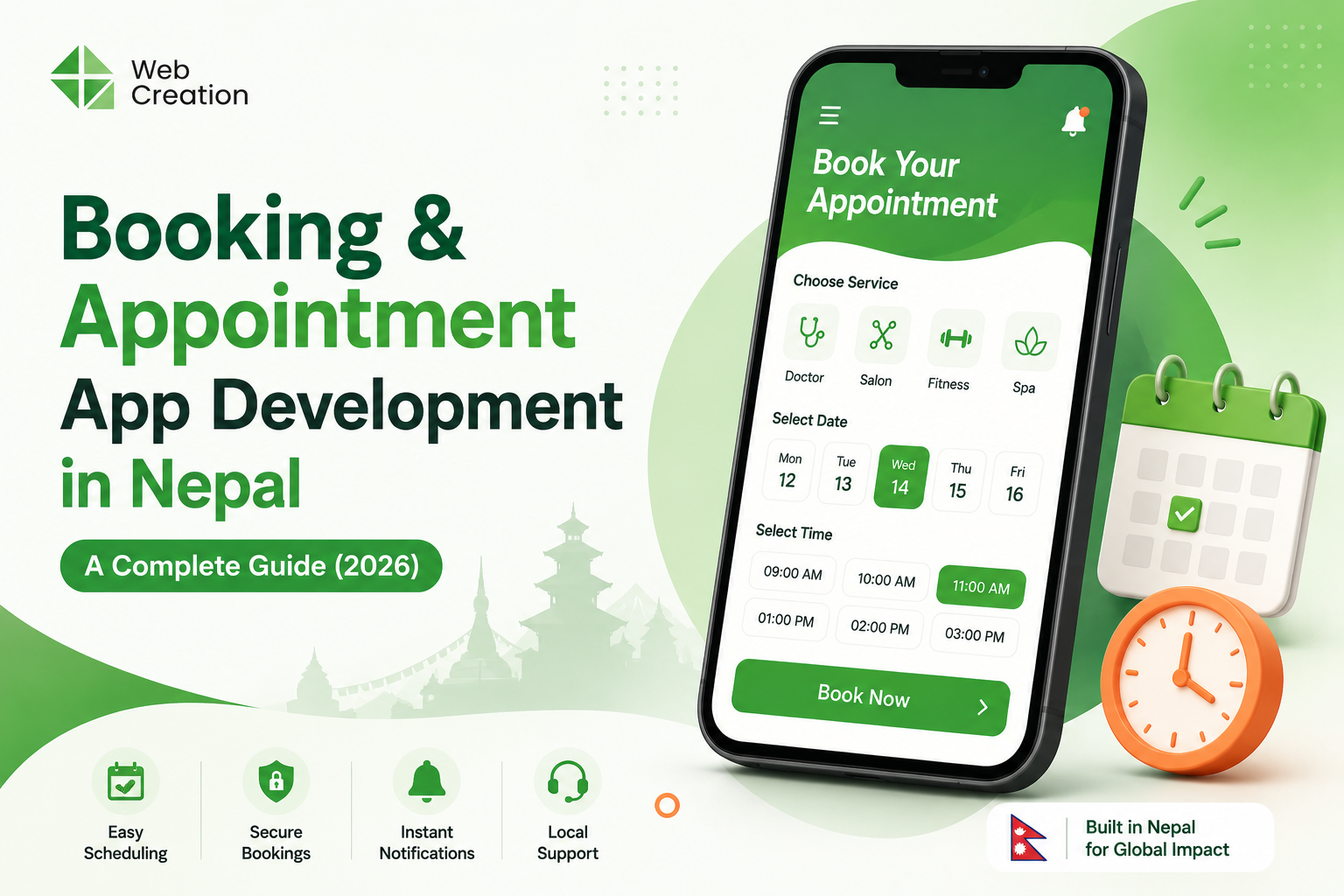
Booking & Appointment App Development in Nepal - A Complete Guide (2026)

September 3, 2026
15 min read
Share:
Booking & Appointment App Development in Nepal
Listen to this article

Complete guide to booking app development in Nepal — costs, features, eSewa/Khalti payments, and build vs buy for salons, clinics & gyms.

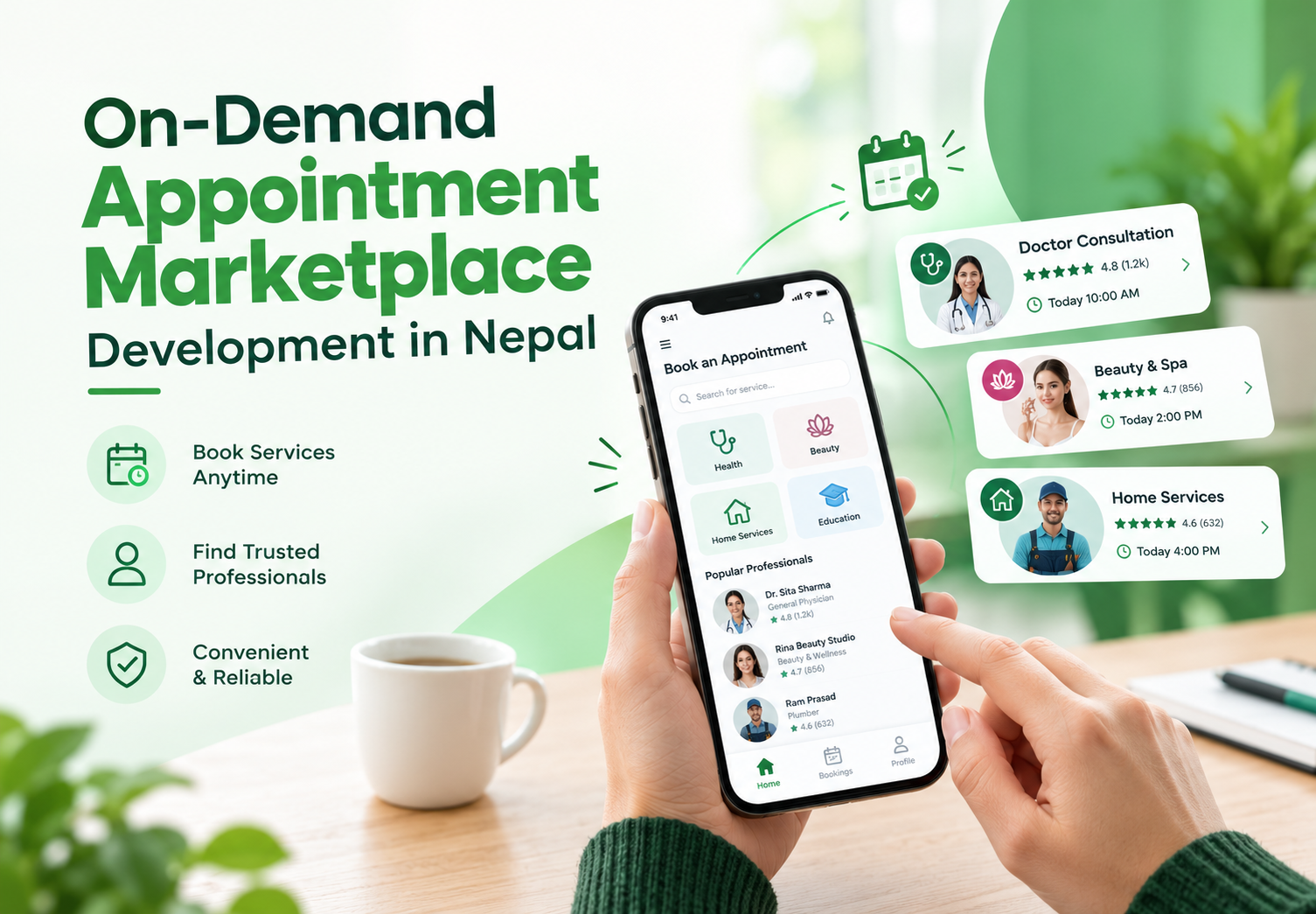
Booking & Appointment App Development in Nepal

It's 7 PM at a salon in Baneshwor. The phone rings three times during a haircut, a walk-in client waits fifteen minutes because two people were booked for the same slot, and a client who wanted an appointment for tomorrow gives up after nobody answers and books elsewhere on Instagram instead. None of this is a service problem — it's a booking problem. A few kilometers away, a clinic running the same kind of business but with a simple booking app has cut its no-shows by taking a small deposit at the time of booking, and its front desk spends the evening confirming tomorrow's schedule instead of chasing missed calls.

If you run a salon, clinic, gym, tutoring service, or any business built around appointments, this guide walks through everything you need to decide: whether you need a custom app at all, what it should include, what it actually costs to build in Nepal, and how to avoid the mistakes that make businesses regret the investment.

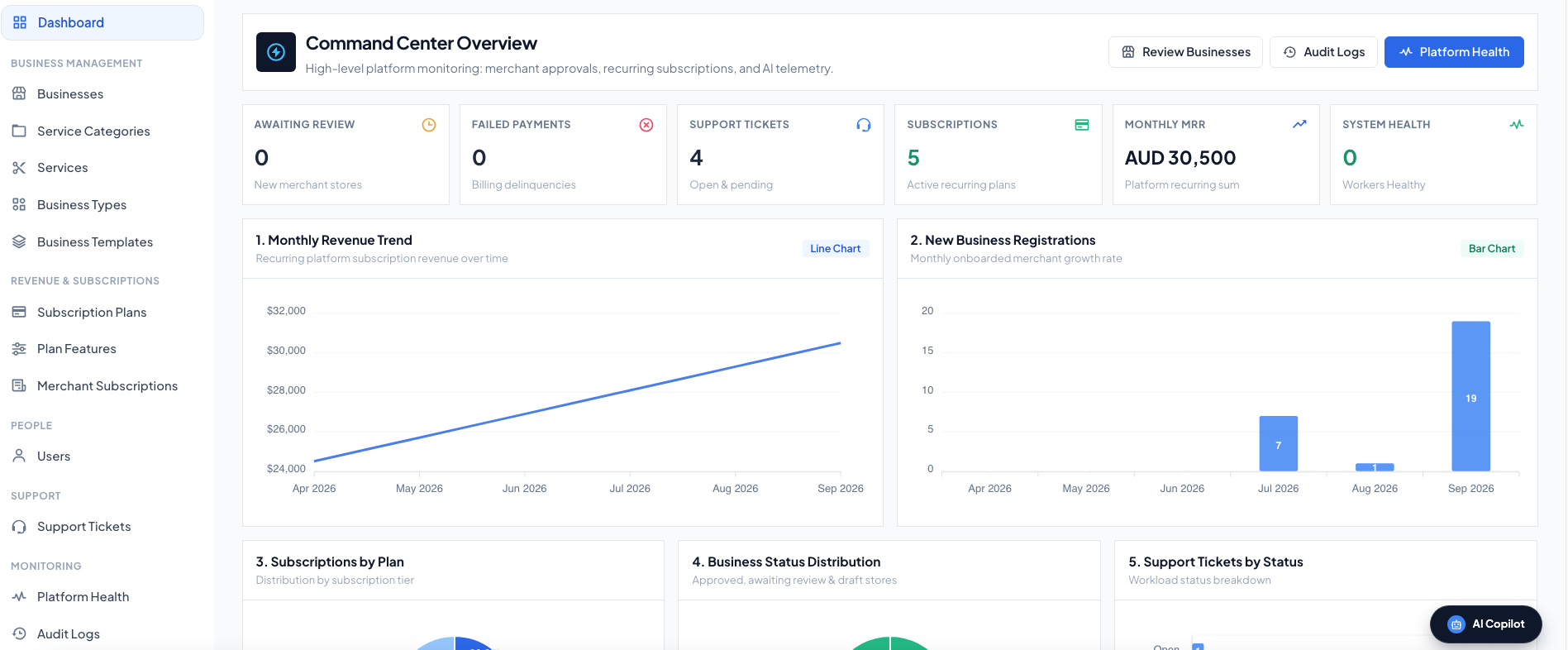
Admin Dashboard

Who Actually Needs a Booking App

Not every service business needs a custom app on day one. But for these types of businesses, the case is strong:

  • Salons and spas multiple staff, multiple services, and clients who expect to book outside business hours
  • Clinics and diagnostic centers appointment slots tied to specific doctors or equipment, where double-booking has real consequences
  • Gyms and fitness studios class schedules, trainer bookings, and membership tracking
  • Tutors and consultantsone-on-one time slots that need to be protected from overlap
  • Repair and home services technicians whose availability changes daily and who need dispatch-style scheduling
  • Co-working spaces desk and meeting room bookings by the hour

If your business runs on a shared calendar and a phone that rings constantly, you're already paying the cost of not having one — you're just paying it in missed bookings instead of a development invoice.

Build vs Buy: Custom App vs Ready-Made Platforms

This is the decision most guides skip, and it's the one that actually matters.

Ready-made platforms like Fresha, Vagaro, and Booksy are fast to launch and well-built. But they come with friction that's easy to miss until you're using one in Nepal:

  • They're built around international card payments. None of them integrate natively with eSewa, Khalti, or ConnectIPS — the payment methods most of your clients actually use and trust.
  • Commission-based platforms like Fresha charge a percentage — commonly cited around 20% — on new clients acquired through their own marketplace, on top of card processing fees. That model was built for markets where card payments dominate, not one where digital wallets and cash-on-arrival are still common.
  • Your client data and booking history live on someone else's platform, not yours.
  • Pricing is in USD/GBP subscriptions, which adds currency risk to a business earning in NPR.
A custom-built app costs more upfront but gives you:
  • Native eSewa/Khalti/bank transfer integration, matched to how your clients actually pay
  • Full ownership of client data and booking history
  • Branding that's entirely yours, not a marketplace listing next to competitors
  • A system built around how your business actually runs — multi-branch, multi-staff, walk-in-friendly, or whatever your specific workflow needs

A simple way to decide: if you run a single location with straightforward scheduling and don't mind a subscription fee and commission cut, a ready-made platform will likely get you 80% of the value with far less upfront cost. If you're running multiple branches, high appointment volume, or want payments to flow the way your customers already pay, a custom app typically earns back its cost within one to two years through saved commissions alone.

Must-Have Features for a Booking App in Nepal

A booking app that actually gets used — not just installed once and abandoned — needs to cover these basics:

  • Real-time availability calendar per staff member or room, so double-booking becomes impossible rather than something the front desk has to catch manually
  • eSewa/Khalti/bank transfer payment, including deposit collection at the time of booking
  • SMS, Viber, or WhatsApp reminders — more reliable in Nepal than email, where open rates are low and messages often go unread for days
  • An admin dashboard, not just a client-facing app — staff need to manage schedules, block time off, and see the day's bookings at a glance
  • Client history, so returning clients don't have to re-explain their preferences every visit, and staff can prompt repeat bookings
  • Manual/walk-in entry, because plenty of Nepali customers will still call or walk in rather than open an app, and your system needs to handle both without creating conflicts

The deposit feature deserves special attention: a deposit taken at booking means a missed appointment costs the client, not just the business. That single mechanism does more to reduce no-shows than reminders alone — reminders help people remember, but a deposit gives them a reason to actually show up.

What Your Booking App Needs, By Business Type

The basics above apply everywhere, but the details that actually make the app useful differ a lot depending on what kind of business you're running. Here's how the needs break down for the three most common types of booking apps built in Nepal.

Salon & Spa Booking Apps

Salons run on staff-specific bookings — a client rarely just wants "an appointment," they want a specific stylist at a specific time. Your app needs:

  • Staff-linked services, so clients can book a specific stylist rather than just a service, and the calendar reflects each staff member's individual availability
  • Service duration logic, since a haircut, coloring, and a spa package all take different amounts of time and the calendar needs to block the right length automatically
  • Package and membership tracking, common in salons offering prepaid packages (e.g. 5 facials for the price of 4) — the app should track remaining sessions per client
  • Photo galleries per service, since salon clients often browse styles before booking, unlike clinic or gym bookings where the service itself is more standardized

A realistic scope for a salon: Standard tier (NPR 300,000–600,000) usually covers staff calendars, eSewa/Khalti deposits, and reminders. Package tracking and photo galleries push it toward the Advanced tier.

Clinic & Diagnostic Center Booking Apps

Clinics carry higher stakes per missed or double-booked slot — a missed diagnostic appointment isn't just a lost sale, it can delay patient care. Priorities shift accordingly:

  • Doctor and equipment-specific scheduling, since a booking might depend on both a doctor's availability and a specific machine (like an ultrasound or X-ray unit) being free at the same time
  • Patient history and document upload, so returning patients don't need to resubmit prior reports, and doctors can review history before the appointment
  • Confirmation calls or SMS with a cancellation window, since clinics generally need a firmer no-show policy than a salon — cancellation cutoffs (e.g. 4 hours before) are worth building into the reminder logic
  • Multi-department support, if the clinic has several specialties, each needing its own calendar and staff list

Clinics also tend to need stronger data privacy handling than salons, given the sensitivity of patient information — this is worth budgeting extra development and testing time for, even if it doesn't show up as a separate line item in a cost quote.

Gym & Fitness Studio Booking Apps

Gyms differ from salons and clinics in one key way: bookings are often class-based (many people, one time slot) rather than one-on-one. That changes what the app needs to prioritize:

  • Class capacity limits, so a yoga class capped at 20 people stops accepting bookings at 20, with an optional waitlist
  • Membership and package integration, since gym clients usually pay monthly or per package rather than per booking — the app needs to check membership validity before confirming a class slot, not just process a one-off payment
  • Trainer-specific personal training bookings, alongside the group class calendar, since many gyms offer both
  • Check-in tracking, useful for both attendance analytics and confirming actual usage against membership packages

For gyms, the Standard tier often needs to stretch further than for a salon, since class-capacity logic and membership validation add complexity even for a single-location gym.

What Does a Booking App Cost to Build in Nepal?

Costs vary based on how many of the features above you need and how complex your business structure is. Based on typical Nepal app-development market rates for this category of app:
PackagesEstimated Cost (NPR)What's Included
Basic150,000 – 300,000Single business, one shared calendar, manual booking confirmation
Standard300,000 – 600,000Multi-staff calendar, eSewa/Khalti payments, automated reminders
Advanced600,000 – 1,200,000+Multi-branch support, admin analytics, loyalty/package management

These figures are a starting reference — always get a specific quote based on your actual feature list, since the difference between a "standard" and "advanced" build often comes down to a handful of features that matter a lot to your specific business (like multi-branch inventory or package/membership tracking).

On top of development, budget for ongoing costs: app store fees, server/hosting, SMS gateway costs per message sent, and a maintenance retainer — typically 15-20% of the initial build cost per year — for bug fixes, OS updates, and small feature additions.

Common Mistakes Nepali Businesses Make

  • Building the client-facing app but forgetting the admin panel. The app looks great in the demo, but staff still end up managing the actual schedule on paper or WhatsApp because the admin side was an afterthought.
  • No fallback for walk-in or phone bookings. If the app can't handle a staff member manually entering a walk-in client, you end up running two disconnected booking systems.
  • Skipping deposit collection. Without it, no-shows stay exactly where they were before the app existed — the technology changed, but the underlying behavior didn't.
  • Hiring based on price alone. A developer with no prior eSewa/Khalti integration experience will cost you in delays and rework, even if their initial quote looks cheaper.

Getting Started

If you're weighing whether a booking app makes sense for your business, the honest first step isn't picking a tech stack — it's mapping out exactly how your current booking process breaks down: where the double-bookings happen, how many no-shows you're losing each month, and whether your clients are already comfortable paying digitally. That's the information that actually determines whether a basic build is enough or whether you need the advanced tier.

If you'd like a free consultation on what your specific business needs — and a real quote instead of a generic estimate — get in touch with our team to talk through your booking workflow.

Frequently Asked Questions (FAQ)

Is a booking app better than just using a Facebook page for my salon?
A Facebook page is fine for discovery and photos, but it doesn't stop double-bookings or collect deposits. Many businesses use both — Facebook to attract clients, and the app to actually manage the schedule and payments.
Can I add eSewa or Khalti payment to my booking app?
Yes — this is one of the most requested features and a standard part of a custom build in Nepal. It's usually integrated the same way it would be for an e-commerce checkout, using the gateway's official SDK or API.
How long does it take to build a booking app in Nepal?
A basic version can typically be built in 4-8 weeks. Standard and advanced versions with more integrations and admin features usually take 2-4 months, depending on scope and how quickly feedback and content are provided during development.
Do I need a website too, or just the app?
A simple website with an embedded booking widget is often worth having alongside the app — it lets clients book without downloading anything, which matters for first-time customers who aren't ready to commit to an install.

Discussion & Feedback

Share your thoughts, ask questions, or provide feedback on this blog. All comments are moderated before being published.

Leave a Reply

Your email address will not be published. Required fields are marked *

Recent Comments

Loading discussion...
Call: 9851029233Email: [email protected]