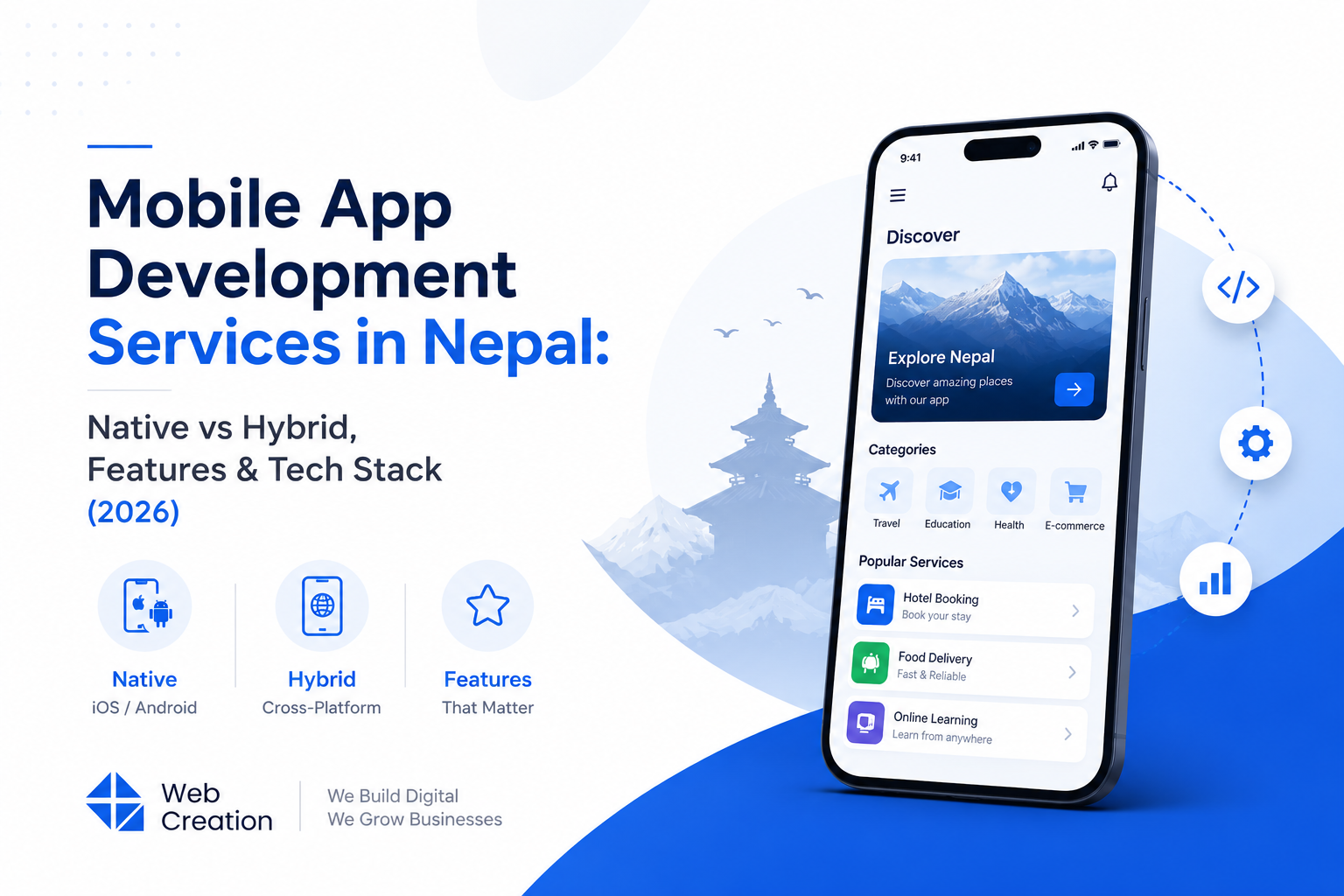
This is the biggest early decision. It affects cost, timeline, and how well the app performs.
| Type | How It Works | Best For | Trade-off |
|---|
| Native | Built separately for iOS (Swift) and Android (Kotlin) | Apps that need top performance — games, camera/AR, hardware features | Two builds = higher cost, longer time |
| Cross-platform | One codebase (like Flutter) works on both iOS and Android | Most business apps — shops, bookings, delivery | Small performance trade-off for graphics-heavy apps |
| Hybrid | A website wrapped inside an app shell | Simple apps, tight budgets, early versions | Feels less smooth than native or cross-platform |
| Progressive Web App (PWA) | A website that acts like an app, no app store needed | Content or catalog apps | Not on App Store/Play Store, limited offline use |
Highlight: For most Nepali businesses, cross-platform apps built with Flutter are the best choice. One codebase runs on both iOS and Android. It costs 20–40% less than building native apps twice, and it still feels smooth.
Native is worth the extra cost only when the app truly needs it — for example, an app that tracks GPS constantly in the background, or does heavy video processing. If you're not sure which one fits your idea, this is the first thing a good development team should help you figure out.
Not sure which type of app fits your business? Talk to our team — it's free, and we'll help you figure it out before you spend a rupee.